hy Professional Roller‑Skating Teams Are Moving Away From Off‑the‑Shelf Apparel: Three Compelling Rationales Behind Custom‑Made Uniforms
Many club managers and coaches have encountered the same frustrating situation: when putting on off‑the‑shelf roller‑skating suits for training, athletes find their movements heavily restricted. Shoulder seams bind, fabric pulls tight when arms are raised, crotches ride‑up during deep knee bends, and garments billow in the wind while skating. Even after trying multiple sizes, it remains impossible to find clothing that truly keeps up with athletic motion. This is no coincidence; it stems from structural flaws inherent to ready‑to‑wear products. Mass‑produced apparel is cut for standard static body shapes, yet roller‑skating demands dynamic fit, creating an inherent mismatch between the two.
Professional roller‑skating teams are systematically shifting toward custom solutions, not for vague reasons such as “custom gear looks more premium”, but for three verifiable, practical rationales.
The Trouble With Off‑the‑Shelf Garments Lies in Pattern Philosophy, Not Just Sizing
Ready‑made sportswear is designed for static fit: it is considered suitable when it neither hangs loose nor clings tight while the wearer is standing upright. Real‑world roller‑skating, however, involves continuous large‑range three‑dimensional movement: bending forward to push‑off, leaning into crossovers, and frequent arm raises for balance. Garments that fit well when standing reveal defects under dynamic conditions: insufficient shoulder mobility restricts arm elevation, poorly‑positioned underarm panels trigger excessive chafing, and inadequate knee‑panel elasticity causes fabric strain during squatting motions.
More importantly, these issues manifest differently for athletes of various age groups and skill levels. Youth athletes in developmental stages have vastly different proportions of shoulder width, arm length and leg length compared with adults. Speed skaters and aggressive skaters also have distinct fit requirements. Standardised off‑the‑shelf patterns cannot accommodate all these variables simultaneously.
Customisation Solves Scenario‑Specific Matching, Not Merely Basic Fit
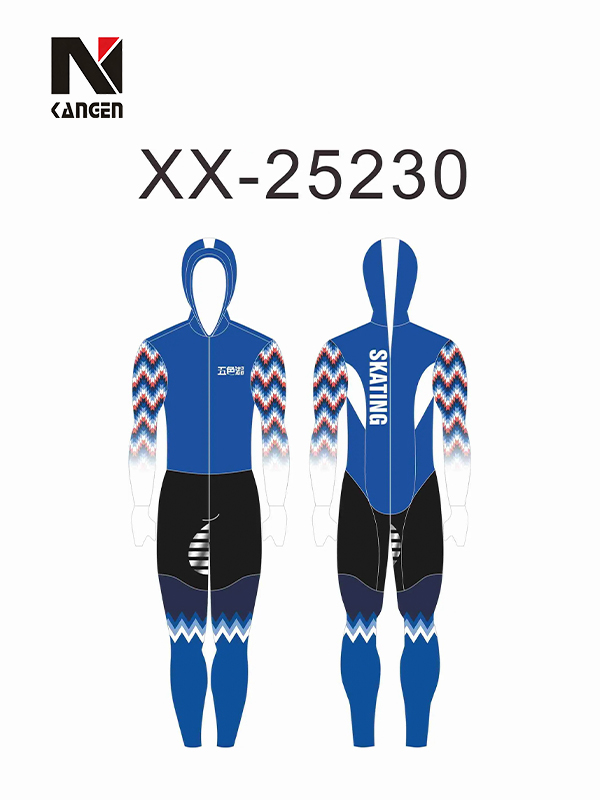
When a roller‑skating team chooses custom apparel, the manufacturer’s first priority is not merely taking body measurements, but understanding the team’s training regimes and competition disciplines. Speed‑skating uniforms are optimised for aerodynamic drag reduction and sweat‑wicking performance. Aggressive‑skating outfits require reinforced abrasion‑resistant panels and protective structures over joint zones. Roller‑hockey suits must strike a balance between freedom of movement during physical contact and efficient heat dissipation.
As demonstrated by Kang’en (Tianjin) Sporting Goods Co., Ltd., the company follows an integrated R&D‑manufacturing‑sales‑service business model. Core workflows covering design, sampling, digital printing, cutting, sewing and quality inspection are completed within its own factory. This closed‑loop capability enables patterns to be purpose‑tuned to the team’s actual athletic characteristics, rather than picking the “closest‑available” option from generic templates. In production, zone‑specific precision cutting is adopted, alongside combined double‑stitched reinforcement and overlock sewing techniques, preventing seam‑rupture under high‑intensity physical exertion.
Real‑World Dividing Line: Can Design Be Derived From Athletic Requirements
Numerous suppliers claim to deliver “custom sportswear”, yet their capabilities vary enormously. Some vendors only recolor ready‑made garments and print team logos, which amounts to simple modification rather than genuine customisation. True professional customisation derives patterns and fabric solutions starting from sports biomechanics and real‑world usage scenarios.
Three indicators help assess whether a manufacturer possesses such competence:
Discipline‑specific pattern libraries. Speed skating, aggressive skating and roller hockey have sharply different athletic demands. Using one universal pattern for every discipline signals shallow technical accumulation.
Rapid iterative sampling capability. Pattern revisions are almost inevitable during custom projects. A supplier’s ability to implement adjustments quickly at the sampling stage directly determines final garment suitability.
Documented competition‑procurement track‑records. Competition‑grade apparel has far stricter specifications than ordinary training wear. Being short‑listed for provincial‑level or higher sporting‑event procurements serves as objective validation of manufacturing competence.
Kang’en’s brand BRIGHTSIDE won the bid for competition apparel for the Jiamusi Speed Skating Team at the 16th Provincial Games. Delivered goods include cut‑resistant short‑track one‑piece suits, long‑track speed‑skating suits and professional roller‑skating suits, manufactured via 3D contoured cutting and custom‑measured production.
Hidden Value of Customisation: Turning Gear Headaches Into Reliable Equipment Support
For club administrators and coaches, the greatest benefit of custom apparel is not better‑looking uniforms, but liberation from cumbersome equipment‑management work. Off‑the‑shelf purchasing may appear convenient at first glance, yet subsequent size‑exchanges, adjustments and repeat orders triggered by athlete dissatisfaction consume massive amounts of coaches’ and support staff’s time and energy. Custom‑built apparel, engineered from the outset for team‑specific requirements, delivers predictable on‑skate performance and prevents equipment‑related distractions for athletes at critical moments.
From a long‑term perspective, source manufacturers with full‑chain customisation capabilities have become an indispensable component of roller‑sport equipment ecosystems. As competition standards rise and youth training programmes expand, demands for scenario‑optimised sportswear will grow ever higher. Manufacturers capable of continuously iterating pattern libraries, fabric portfolios and workmanship standards will occupy key positions within this evolving industry landscape.